
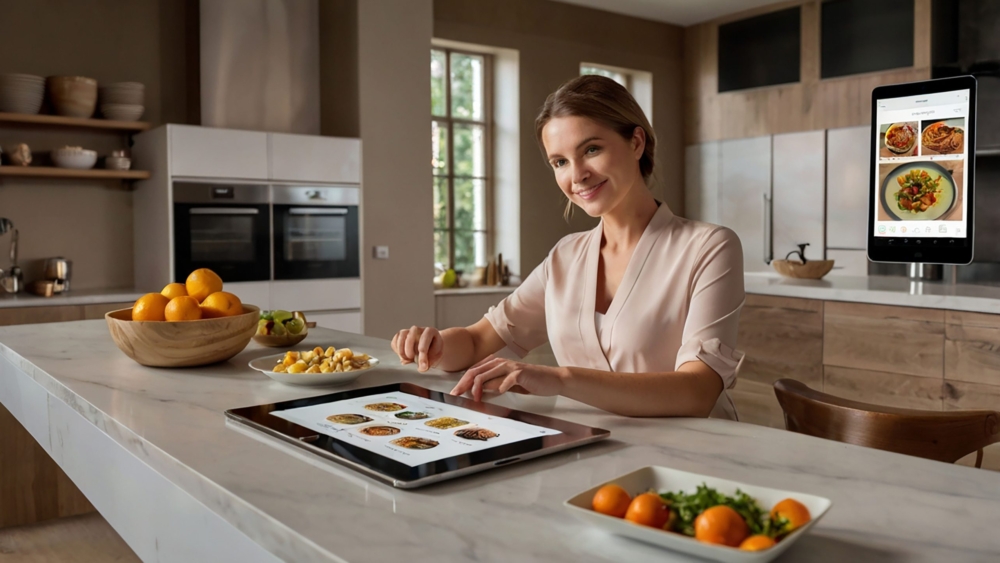
A kitchen is one of the most demanding environments for connected technology. Appliances perform different tasks, operate under different conditions, and must remain useful even when digital features are unavailable. A connected refrigerator, oven, dishwasher, or coffee maker therefore needs to offer more than an attractive mobile interface.
The most valuable features are those that help people understand appliance status, coordinate activities, or manage routine work.
The refrigerator as a household organizer
Some connected refrigerators can monitor internal conditions, notify users when a door remains open, or help maintain a digital record of stored items. Models with inventory tools may make it easier to plan meals around ingredients already available.
However, automatic inventory tracking has limitations. Packaging can obscure labels, items can be moved between shelves, and food can be consumed without the system registering the change. A digital list is best treated as an aid rather than a perfect representation of everything inside the refrigerator.
Temperature alerts can be particularly useful, provided that sensors are accurate and notifications arrive reliably. They can draw attention to a potential problem before it goes unnoticed for an extended period.
Cooking with connected ovens
A connected oven may support remote preheating, cooking notifications, temperature monitoring, or integration with compatible recipe tools. These features can help coordinate meal preparation, particularly when several dishes require different cooking times.
Remote control must nevertheless be considered carefully. Some appliances restrict remote activation until a person enables the function on the appliance itself. Such safeguards can reduce risks associated with starting equipment while nobody is present.
Users should follow the manufacturer's instructions and never assume that a remote command overrides built-in safety requirements.
Dishwashers and the value of status information
A dishwasher can send a notification when a cycle finishes, report a maintenance issue, or provide information about water consumption. These functions are relatively modest, but they address a familiar inconvenience: uncertainty about whether a cycle is complete or whether the appliance needs attention.
Notifications are most useful when they communicate something actionable. Frequent messages about routine events can become background noise, causing important warnings to be overlooked.
Coffee makers and daily routines
Programmable connected coffee makers can coordinate preparation with a morning schedule. Depending on the model, users may adjust settings, initiate supported functions, or receive maintenance reminders.
Yet a reliable timer can be sufficient for many households. A more advanced interface does not necessarily produce better coffee or make the machine easier to clean.
The practical side of connected cooking
Before buying a connected appliance, consider its primary function, repairability, cleaning requirements, and expected lifespan. Software support matters, but it should not distract from basic performance.
Also think about the people who will use it. A complex touch interface may frustrate someone who prefers physical controls. A mobile application may be inconvenient when hands are wet or covered in ingredients.
The best connected kitchen is not the one with the most digital features. It is the one in which technology supports cooking, reduces uncertainty, and leaves more attention available for the meal itself.